Across the modern world, people are being told that the rising cost of living is an unfortunate accident — the result of global instability, unpredictable markets, or forces beyond human control. But this narrative conceals a deeper truth. The crisis gripping households today is not a natural disaster. It is the predictable outcome of an economic order that has transformed life’s most essential needs into opportunities for private profit.
Nowhere is this clearer than in the realm of energy. Electricity, heating, fuel, and the infrastructure that sustains them are the arteries of modern civilisation. Yet in many capitalist economies, these necessities have been reclassified as commodities — bought, sold, speculated upon, and leveraged for financial gain. The result is a system in which the well-being of millions is subordinated to the profit margins of a few.
When energy becomes a commodity, the public becomes a revenue stream. When necessities become assets, people become targets.
This article examines how contemporary capitalism has enabled the privatisation of essential resources, the financialisation of energy markets, and the concentration of petro‑wealth in the hands of elites. It explores how taxation regimes increasingly resemble the classical Islamic category of muks — unjust levies imposed on the public. And it contrasts this with the Islamic legal tradition, which treats energy and natural resources as al‑marāfiq al‑ʿāmmah: public utilities belonging to all people, not the private inheritance of rulers or corporations.
Capitalism – When Necessities Become Commodities
Across much of the modern world, the cost-of-living crisis is not a natural disaster.
It is the predictable result of an economic system that treats energy—the lifeblood of modern society—as a private commodity rather than a public necessity.
In many capitalist economies:
- oil and gas have been privatised,
- electricity grids have been sold to corporations,
- and energy markets have been financialised,
allowing well‑connected investors to profit from volatility long before any real shortage occurs.
When energy becomes a profit‑maximising asset, the public becomes a profit‑extracting target.
Speculation, Crisis, and the Financialisation of Energy
Energy prices often rise not because of genuine scarcity, but because:
- financial institutions speculate on crude oil benchmarks,
- traders bet on geopolitical tensions [as has occurred recently with the Iran war],
- and energy futures become a playground for those with insider access.
In such a system:
- a rumour can raise prices,
- a conflict can enrich traders,
- and households pay the bill.
This is not economics — it is structured extraction.
Petro‑Wealth and Elite Capture
In several resource‑rich regions, oil and gas revenues have been treated as the private inheritance of ruling elites rather than the collective wealth of the population.
This has enabled:
- extravagant luxury spending,
- offshore accounts,
- foreign property portfolios,
- and the export of national wealth into private hands.
Investigations such as the Panama Papers and Pandora Papers revealed how some elites used petrodollars to acquire:
- super‑yachts,
- luxury real estate,
- and hidden financial vehicles abroad.
In the latest leak, it was revealed that the Qatari ruling family bought two of the UK’s most expensive homes ever sold. The wife of the former Emir of Qatar bought 1 Cornwall Terrace, opposite Regent’s Park, for £84m, then purchased 2-3 Cornwall Terrace for a further £40m.
In 1996, according to diplomatic cables released by WikiLeaks, the annual ‘allowances’ for the thousands of Saudi royals were around $2 billion. Estimates of the royal family’s current wealth are $1.4 trillion.
Meanwhile, ordinary citizens — whose land contains these resources — face:
- rising living costs,
- limited public services,
- and dependence on imported goods.
This is the opposite of justice.
Fuel Taxation and the Return of Muks
In many countries, taxes on petrol and diesel account for a significant share of the pump price.
These taxes are often:
- regressive,
- burdensome on the poor,
- and disconnected from actual infrastructure costs.
The Shari‘ah has a term for unjust, arbitrary levies on essential goods: muks.
Ibn al‑Qayyim (died 751 H) said:
«المكوس من أعظم الظلم في الأموال»
“Unjust levies (muks) are among the greatest forms of financial oppression.”
[Iʿlām al‑Muwaqqiʿīn, vol. 3, p. 3]
Fuel taxation that disproportionately harms the poor echoes this classical category.
Here in the UK, as we enter the fourth week of the war on Iran, the Treasury is taking in an extra £91m a month in VAT on fuel sales – a figure that amounts to more than £1bn annually. This is in addition to fuel duty, which is charged at a flat rate of 52.95p per litre for both petrol and diesel.
Energy Companies and Public Exploitation
Privatised energy companies often operate as:
- natural monopolies,
- insulated from competition,
- guaranteed profit by regulatory structures.
This allows them to:
- raise prices faster than inflation,
- distribute record dividends,
- and shift the burden onto households.
The public becomes captive to private profit.
The Islamic Alternative: Energy as Public Property
The Islamic Shari‘ah offers a radically different model rooted in the doctrine of al-marāfiq al-ʿāmmah:
Classical jurists define marāfiq al‑ʿāmmah as:
- Roads
- Water sources
- Rivers
- Pasture
- Fire/fuel
- Public squares
- Mosques
- Public baths
- Public markets
- Minerals and natural resources
These are not owned by the ruler and are not restricted to Muslims.
The Prophet ﷺ said:
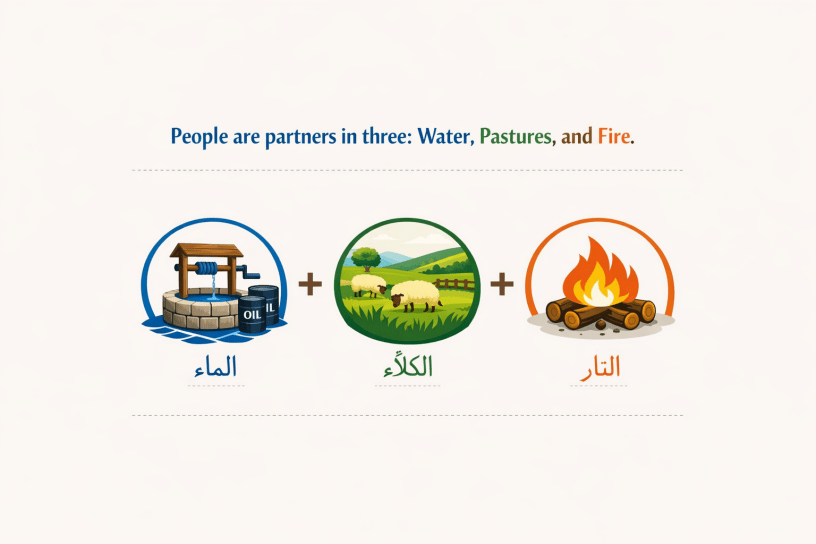
«النَّاسُ شُرَكَاءُ فِي ثَلَاثٍ: الْمَاءِ، وَالْكَلَإِ، وَالنَّارِ»
“People are partners in three: water, pasture, and fire.”
[al‑Muwaṭṭaʾ,vol. 2 p. 746,Sunan Abī Dāwūd, 3477,Sunan Ibn Mājah, 2473, Al‑Tirmidhī: ḥasan ṣaḥīḥ (vol. 3, p. 603), Al‑Ḥākim: ṣaḥīḥ al‑isnād (al‑Mustadrak, vol. 2, p. 4)]
Classical jurists regarded “fire” as including fuel and energy sources.
Imām al‑Shāfiʿī (d. 204 H) said:
قال الشافعي رحمه الله: «إِنَّمَا أُرِيدَ بِقَوْلِهِ ﷺ: “النَّاسُ شُرَكَاءُ فِي ثَلَاثٍ” مَا لَا يَقْدِرُ أَحَدٌ عَلَى اسْتِحْوَاذِهِ عَلَيْهِ، كَالْمِيَاهِ الْجَارِيَةِ وَالْكَلَإِ وَالنَّارِ، وَالنَّارُ هِيَ أُصُولُ الْإِيقَادِ مِنْ حَطَبٍ وَوَقُودٍ، فَلَا يَحِلُّ لِأَحَدٍ أَنْ يَمْنَعَهَا عَنِ النَّاسِ».
“What is intended by his ﷺ statement ‘People are partners in three’ is that which no one can rightfully monopolise, such as flowing waters, open pasture, and fire. And ‘fire’ refers to the sources of ignition — wood, fuel, and the like. It is not lawful for anyone to prevent people from them.”
[Al‑Shāfiʿī, al‑Umm, ed. Rifʿat Fawzī ʿAbd al‑Muṭṭalib. Mansoura: Dār al‑Wafāʾ, 2001, vol. 4, p. 252–253]
Imam al‑Ghazālī (d. 505 H) said:
«وَأَمَّا حُقُوقُ الطُّرُقِ وَالْمَنَافِعِ الْمُشْتَرَكَةِ فَهِيَ لَا تُخْتَصُّ بِأَحَدٍ، بَلْ هِيَ لِجَمِيعِ النَّاسِ، لَا يَجُوزُ لِأَحَدٍ أَنْ يَمْنَعَ غَيْرَهُ مِنْهَا.»
“As for the rights of roads and shared public benefits, they are not exclusive to anyone; rather, they belong to all people, and no one may prevent another from [using] them.”
[Al‑Ghazālī, Iḥyāʾ ʿUlūm al‑Dīn, Book of Ādāb al‑Muʿāsharah]
Ibn Qudāmah (d. 620 H) said
«وَأَمَّا الطُّرُقُ وَالْمَنَافِعُ الْمُشْتَرَكَةُ فَإِنَّهَا لَا تُخْتَصُّ بِمِلْكِ أَحَدٍ، بَلْ هِيَ لِجَمِيعِ النَّاسِ، يَسْتَوُونَ فِي الِانْتِفَاعِ بِهَا، وَلَا يَجُوزُ لِأَحَدٍ أَنْ يَمْنَعَ غَيْرَهُ مِنْهَا إِلَّا لِضَرَرٍ.»
“As for public roads and shared utilities, they cannot be owned by any individual; rather, they belong to all people, who are equal in benefiting from them. No one may prevent another from them except due to harm.”
[Ibn Qudāmah, al‑Mughnī, Beirut: Dār ʿĀlam al‑Kutub, 1983. Vol. 6, p. 186]
Ibn Mufliḥ (d. 763 H) said:
«وَحُقُوقُ الطُّرُقِ وَالْمَرَافِقِ يَسْتَوِي فِيهَا أَهْلُ الْإِسْلَامِ وَأَهْلُ الذِّمَّةِ، لِأَنَّهَا حُقُوقٌ لِلْجَمِيعِ، فَلَا يَجُوزُ أَنْ يُمْنَعَ مِنْهَا أَحَدٌ إِلَّا لِضَرَرٍ.»
“The rights pertaining to roads and public utilities are equal for the people of Islam and the people of the covenant, because they are rights belonging to everyone. No one may be prevented from them except due to harm.”
[Ibn Mufliḥ, al‑Furūʿ, Beirut: Dār al‑Kutub al‑ʿIlmiyyah, 1997. Vol. 6, p. 45]
Al‑Qarāfī (d. 684 H) said:
«وَأَمَّا حُقُوقُ الْعَامَّةِ فَهِيَ الَّتِي شُرِعَ نَفْعُهَا لِجَمِيعِ النَّاسِ، مُسْلِمِهِمْ وَذِمِّيِّهِمْ، كَالطُّرُقِ وَالْأَنْهَارِ وَالْكَلَإِ وَالنَّارِ…».
“As for public rights, they are those whose benefit is legislated for all people — Muslims and people of the covenant — such as roads, rivers, pasture, and fire…”
[Al‑Qarāfī, al‑Furūq, Beirut: Dār al‑Kutub al‑ʿIlmiyyah, 2003, vol. 4, p. 219]
Ibn ʿĀbidīn (d. 1252 H) said:
«وَحُقُوقُ الْعَامَّةِ كَالطُّرُقِ وَالْأَنْهَارِ وَالْمَرَافِقِ يَسْتَوِي فِيهَا الْمُسْلِمُ وَالذِّمِّيُّ، لِأَنَّهَا لِلْجَمِيعِ».
“Public rights such as roads, rivers, and utilities are equal for Muslims and people of the covenant, because they belong to everyone.”
[Ibn ʿĀbidīn, Radd al‑Muḥtār, Beirut: Dār al‑Fikr, n.d., vol. 4, p. 356]
Ibn Ḥajar (d. 852 H) said:
قال ابن حجر رحمه الله: «وَفِي حَدِيثِ: “النَّاسُ شُرَكَاءُ فِي ثَلَاثٍ” دَلِيلٌ عَلَى أَنَّ أُصُولَ الْمَنَافِعِ الَّتِي لَا يَسْتَغْنِي عَنْهَا النَّاسُ لَا تُخْتَصُّ بِمِلْكِ أَحَدٍ، وَأَنَّهَا مُشَاعَةٌ بَيْنَهُمْ، كَالْمَاءِ وَالْكَلَإِ وَالنَّارِ، وَالْمُرَادُ بِالنَّارِ: أُصُولُهَا مِنَ الْوَقُودِ وَالْحَطَبِ».
“In the ḥadīth ‘People are partners in three’ is proof that the foundational resources people cannot live without cannot be privately owned, but are shared among them — such as water, pasture, and fire. And what is meant by ‘fire’ is its sources: fuel, wood, and the like.”
[Ibn Ḥajar al‑ʿAsqalānī, Fatḥ al‑Bārī, Beirut: Dār al‑Maʿrifah, n.d., vol. 5, p. 341]
Al‑Zurqānī (d. 1122 H) — Sharḥ al‑Muwaṭṭaʾ
This is the authoritative Mālikī commentary explaining the meaning of the ḥadīth:
قال الزرقاني المالكي رحمه الله: «وَمَعْنَى قَوْلِهِ ﷺ: “النَّاسُ شُرَكَاءُ فِي ثَلَاثٍ” أَنَّ أُصُولَ هَذِهِ الْمَنَافِعِ لَا تُخْتَصُّ بِمِلْكِ أَحَدٍ، بَلْ هِيَ لِلْجَمِيعِ، وَالنَّارُ هِيَ الْوَقُودُ وَالْحَطَبُ وَمَا فِي مَعْنَاهُمَا».
“The meaning of his ﷺ statement ‘People are partners in three’ is that the foundational resources of these benefits cannot be privately owned, but belong to everyone. And ‘fire’ means fuel, wood, and whatever resembles them.”
[Al‑Zurqānī, Sharḥ al‑Zurqānī ʿalā al‑Muwaṭṭaʾ, Beirut: Dār al‑Kutub al‑ʿIlmiyyah, 1996, vol. 4, p. 358–359]
Al‑Kāsānī (d. 1191 CE) said:
«وَالنَّارُ أُصُولُهَا مِنَ الْحَطَبِ وَالْوَقُودِ، وَهِيَ مُبَاحَةٌ لِلنَّاسِ لَا يَجُوزُ لِأَحَدٍ أَنْ يَسْتَبِدَّ بِهَا دُونَهُمْ، لِقَوْلِهِ ﷺ: “النَّاسُ شُرَكَاءُ فِي ثَلَاثٍ”».
“‘Fire’ refers to its sources — wood, fuel, and the like — and these are permissible for all people and cannot be monopolised, due to his ﷺ statement: ‘People are partners in three.’”
[Al‑Kāsānī, Badāʾiʿ al‑Ṣanāʾiʿ, Beirut: Dār al‑Kutub al‑ʿIlmiyyah, 1986, vol. 5, pp. 129–130]
Ibn Taymiyyah
«مما جعله الله مشاعًا بين الناس، لا يجوز لأحد أن يستأثر به، ولا أن يأخذ عليه مكوسًا»
“Allah has made them common among people. It is not permissible for anyone to monopolise them or impose levies upon them.”
[Majmūʿ al‑Fatāwā, vol. 28, pp. 79–80]
Ibn al‑Qayyim
«من المرافق العامة التي حرم الشارع حبسها»
“They are public utilities which the Lawgiver forbade to be withheld.”
[Iʿlām al‑Muwaqqi ‘īn, vol. 2, p. 158]
What an Islamic Energy Policy Would Look Like
1. Public ownership of natural resources
Energy belongs to the population collectively.
2. No privatisation of essential utilities
The state administers resources as a trustee, not an owner.
3. No speculative pricing
Energy cannot be turned into a financial instrument.
4. No muks (unjust taxes)
Fuel taxes that burden the poor would be prohibited.
Revenue distributed to the public
Surpluses would fund:
- healthcare,
- education,
- infrastructure,
- and direct public benefit.
Conclusion: A Just Alternative Exists
The cost‑of‑living crisis is not inevitable.
It is the result of:
- privatisation,
- speculation,
- elite capture,
- and unjust taxation.
The Islamic economic system offers a just alternative grounded in divine revelation:
Energy is a public right.
Not a private commodity.
Not a tool of exploitation.
Not a source of elite enrichment.
A society that treats essential resources as shared trusts rather than profit engines is one that protects the dignity, livelihood, and stability of all its people.
Conclusion
The crises we face today are not accidents of history. They are the logical outcome of an economic order that has severed wealth from responsibility, and necessity from justice. When energy, water, minerals, and the basic infrastructures of life are treated as private assets, societies become vulnerable to the whims of markets, the greed of elites, and the volatility of global speculation. The public is left exposed, while those who control the levers of extraction grow richer with every shock.
But this is not the only way to organise a society.
The Islamic economic system offers a radically different vision — one in which essential resources are not commodities but public trusts, protected under the doctrine of al‑marāfiq al‑ʿāmmah. Classical jurists across the madhhabs understood that roads, water, fire, minerals, and the means of collective life belong to all people, not to rulers, corporations, or financial speculators. They recognised that when necessities are monopolised, injustice becomes systemic; when they are shared, society becomes stable.
A society that allows a handful to privatise the lifeblood of the nation — its energy, its natural resources, its public utilities — is a society that has surrendered the common good. A society that protects these resources as public rights affirms the dignity of every human being.
In the next part of this series of articles, we will examine the prohibition of interest.
 The Caliphate