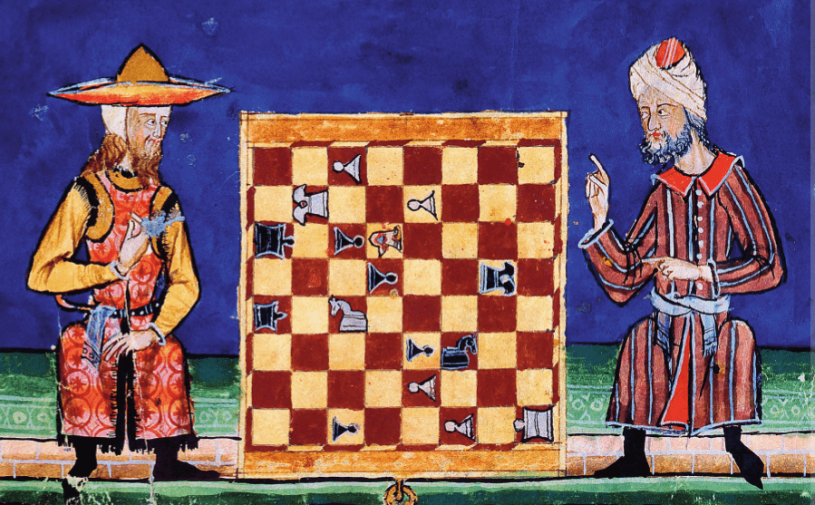
“Islam saved Jewry”, writes Professor David Wasserstein in the Jewish Chronicle, “This is an unpopular, discomforting claim in the modern world. But it is a historical truth. The argument for it is double. First, in 570 CE, when the Prophet Mohammad was born, the Jews and Judaism were on the way to oblivion. And second, the coming of Islam saved them, providing a new context in which they not only survived, but flourished, laying foundations for subsequent Jewish cultural prosperity…”
Professor Wasserstein states that before the emergence of Islam, between the fourth and the seventh centuries, there was a “relentless whittling away of the status, rights, social and economic existence, and religious and cultural life of Jews all over the Roman empire.” In stark contrast to this, “within a century of the death of Mohammad, in 632, Muslim armies had conquered almost the whole of the world where Jews lived, from Spain eastward across North Africa and the Middle East as far as the eastern frontier of Iran and beyond. Almost all the Jews in the world were now ruled by Islam. This new situation transformed Jewish existence. Their fortunes changed in legal, demographic, social, religious, political, geographical, economic, linguistic and cultural terms – all for the better.” [David J Wasserstein, ‘So, what did the Muslims do for the Jews?’, Jewish Chronicle, May 24, 2012]
The celebrated orientalist Merlin Swartz writes in a journal article for The Muslim World:
“Though anti-Jewish sentiments in eastern Christendom can be traced back to the first century and are reflected in the New Testament, the discriminatory measures enacted by Constantine and Theodosius II gave a new impetus to these sentiments which, more and more, were openly endorsed and promoted by Church leaders themselves. St. Chrysostom, for example, the most powerful and influential Christian preacher of the fourth century, is known to have used his sermons to launch bitter verbal attacks against Jews. A little later Cyril, bishop of Alexandria, played a key role in the massacre and expulsion of the Jews from that city. Under the Byzantine emperor Justinian (483-565), and with strong ecclesiastical backing, a systematic attempt was made to stamp out organized Jewish life in North Africa. Synagogues were confiscated, public worship was proscribed, and at least one Jewish community – the one at Bonn – was completely destroyed.”
He then describes the treatment of Jews under the Christian emperor Heraclius:
“In the year 629, following the recapture of Palestine from the Persians, the Jewish residents of Jerusalem were massacred. Three years later, and just one year before the Arab armies were to appear en masse on the northern frontiers of Arabia, Heraclius issued a decree forbidding the public exercise of Judaism and ordered all Jews within his realm to submit to baptism.
When the Arab-Muslim armies advanced in 633 CE, the Jews were initially apprehensive. “The course of events, however, very quickly demonstrated this initial apprehension to be without ground. And with their fears allayed, Jews in one region after the other began throwing their support behind the advancing Arab armies. The sources are replete with moving accounts of the assistance rendered by these Jewish communities. In many areas the Arab armies were openly and enthusiastically welcomed as ‘liberators’ from the oppressive rule of Christian overlords. And the Arabs, for their part, soon came to regard these Jewish communities as allies in a common cause. Though some of this support may have been dictated by considerations of expediency, there is, on the whole, no reason to doubt its well-intentioned, even spontaneous, character.”
“A Jewish document widely circulated during the first century of Arab rule described Islam as “an act of God‘s mercy.” Indeed, taken as a whole, the sources make it quite clear that the Arab conquest was widely hailed among contemporary Jews as a divine intervention by God on behalf of ‘His People’ and was regarded, therefore, as an event full of promise for the future. Contrary to what is popularly believed in the West, the indigenous Jewish communities in the conquered areas were not coerced into accepting Islam. The old image of Muslim armies forcing conversion at the point of the sword is a blatant distortion that has its roots in Crusader propaganda. Taking seriously the Qur’anic injunction, “There is to be no compulsion in matters of religion,” [2:256] the conquering armies permitted Jews and Christians to remain such…”
Jews were given a positive legal status “based in part on precedents established by Muhammad in the constitution of Medina … the right of Jews to life, property, protection, and the free exercise of their faith …was guaranteed by Islamic law. In the spheres of religious practice and personal life, Jews were to be governed by their own law. Only in their relations with the larger non-Jewish community were they to come under the jurisdiction of the law of the state. On the other hand, individual Jews could always have recourse to Islamic law if they preferred. And from the sources we know that occasionally, at least, they did avail themselves of this privilege.”
“Furthermore,” writes Swartz, “Islamic law made no distinction between Jews and other minority faiths. Together with Christians and Zoroastrians, Jews formed part of a much larger class of ‘protected persons’ (ahl al-dhimma; dhimmis). All members of this class, irrespective of creedal, ethnic, or other differences, were recognized by and enjoyed the same standing before Islamic law. In return for protection and the other rights guaranteed by that law, dhimmis were to pay a poll tax (jizya). [This] was a tax paid in return for certain benefits, and when those benefits could not be guaranteed, Islamic law stipulated that the tax was to be returned.In order to prevent it from becoming a burden to dhimmis, the law further stipulated that it could only be collected from those who were capable of paying it. Women, children, the elderly, the blind and crippled, the poor and unemployed were exempted. One early Jewish writer referred to it as a ‘slender poll tax’ in return for what he described as ‘an almost boundless toleration…’ ”
[Merlin Swartz, The Position of Jews in Arab Lands Following the Rise of Islam, The Muslim World, Volume 60, Issue 1, January 1970]
A noteworthy example of when the Muslims offered to return this tax to Christian and Jewish citizens occurred around 636 CE. Baladhuri (died c, 279 H/892 CE) narrates the following in Futūḥ al-Buldān:
وحدّثني أبو حفص الدمشقي، عن سعيد بن عبد العزيز قال: لما اجتمع هرقل والمسلمون باليرموك، ردّ المسلمون على أهل حمص ما كانوا أخذوه منهم من الجزية، وقالوا: قد شغلنا عن نصرتكم والدفع عنكم، فأنتم على أمركم. فقال أهل حمص: لولايتكم وعدلكم أحبّ إلينا ممّا كنّا فيه من الظلم والغشم. ولندفعنّ عنكم عدوّكم مع عاملِكم. وقالت اليهود: وعزّة التوراة، لا يدخل هرقل حمص إلا أن نُغلب ونُجهد. فأغلقوا الأبواب، وحرسوها. وفعل أهل سائر المدن التي صالحوا عليها مثل ذلك، وقالوا: إن ظهر الروم على المسلمين صرنا إلى ما كنّا عليه، وإلا ثبتنا على صلحنا وما كان لنا منكم. فلمّا نصر الله المسلمين على الكفّار، فتحوا الأبواب، وخرجوا يُغنّون ويضربون بالدفوف، ودفعوا الجزية.
“Abu Hafs al-Dimashqi from Sa‘id ibn ‘Abd al-‘Aziz:
When Heraclius massed his troops at Yarmuk [in Syria], the Muslims refunded to the inhabitants of Hims the tax they had taken from them saying, ‘We are too busy [on other fronts] to support and protect you. Take care of yourselves.’
But the people of Hims replied: ‘We like your rule and justice far better than the state of oppression and tyranny in which we were. The army of Heraclius we shall indeed, with your ‘Amil’s [Mayor’s] help, repulse from the city.’
The Jews rose and said, ‘We swear by the Torah, no governor of Heraclius shall enter the city of Hims unless we are first vanquished and exhausted!’ Saying this, they closed the gates of the city and guarded them. The inhabitants of the other cities – Christian and Jew – that had capitulated to the Muslims, did the same, saying, ‘If Heraclius and his followers win over the Muslims we would return to our previous condition, otherwise we shall retain our present state so long as numbers are with the Muslims.’
When by Allah’s help the unbelievers were defeated and the Muslims won, they opened the gates of their cities, went out with their singers and music players who began to play, and paid the tax.”
[Futūḥ al-Buldān, Cairo, 1959, p. 143. Cf. Philip Hitti, The Origins of the Islamic State: Being a translation from the Arabic … of the Kitab Futuh al-Buldan of al-Imam Abu’l ‘Abbas Ahmad ibn Jabir al-Baladhuri – Vol. 1 , Colombia University, New York, 1916, pp. 210-211; Cf. also Norman A. Stillman, The Jews of Arab Lands – A History and Source Book, The Jewish Publication Society of America, Philadelphia, 1979, p.153. Emphases in bold have been added]
Jewish Sources Predict the Emergence of the Prophet ﷺ and the Victory of Islam
In addition to the justice and kind treatment Jews enjoyed under Islamic rule, another possible reason for their allying with the Muslims is the prediction of the arrival of Prophet Muhammad ﷺ and the Arab victory over the Christians in Jewish sources. Professor Kenneth Atkinson refers to the apocalyptic texts attributed to Rabbi Šimʿōn Ben Yoḥai, a prominent religious figure during the Second Jewish Revolt (132-35 C.E.), who was famous for his rejection of Roman rule and culture. In particular, The Secrets of R. Šimʿōn ben Yoḥai (=Secrets) contains material attributed to Šimʿōn that documents Islamic history.
“[There is] a passage in the … Secrets that contains a messianic interpretation of the Arab Conquest. This section briefly mentions an Ishmaelite prophet. It begins with a description of two empires: the Arabs (=Kenites, Ishmaelites) and the Byzantines (=Edom):
‘He began to sit and explain “and he beheld the Kenite” (Num 24:21). When he saw that the kingdom of Ishmael was coming, he began to say, “Is it not sufficient, what the wicked kingdom of Edom did to us, but must we also have the kingdom of Ishmael?” Then Metatron the Prince of the Presence, answered and said, “Do not fear, Son of Man, for the Holy One, Blessed be He, only brings the kingdom of Ishmael in order to save you from this wickedness (i.e. Edom). He will raise up over them a prophet in accordance with His will, and he will conquer the land…“How do we know that they are our salvation?” He answered, “Did not the Prophet Isaiah say, “And he saw a troop with a pair of horsemen, one riding an ass, one riding a camel (Isa 21:7).” When did he put the rider of an ass before the rider of the camel?” He should have said “rider of a camel, rider of an ass?” But when he goes forth riding a camel the dominion will sprout through the rider on an ass.”
Professor Atkinson explains: “The reference to Numbers 24:21 suggests that the original work contained a messianic interpretation of the Arab conquest of Palestine in which the Kenites subdue the oppressive Byzantines. The “rider” seems to be the prophet Muhammad, whose appearance is described in messianic terms. Isaiah 21:5-7 became a widely cited text as proof that the Hebrew Scriptures predicted Muhammad. The author expects the Arabs to play a role in the messianic period by eliminating the Byzantines…The use of the Isaiah passage compares the Arabs’ mission with that of the Messiah: the Arabs are not merely his forerunners, but the liberators prophesied by Isaiah”.
The writer of the Secrets was not the only Jewish author to espouse a favourable view of the end of Byzantine rule and the Arab Conquest. The apocalyptic prophecy known as On That Day articulates the writer’s messianic hopes following the final war between the Byzantine and Persian Empires. He believes the Arab Conquest of Palestine signals the imminent coming of the Messiah. The messianic content of the Midrash of the Ten Kings is also similar to the Secrets … but its historical content is sometimes different and less specific. The Ten Kings includes a quotation from Isaiah 21:13… The writer also says that “great men of Israel” will join Muhammad and that he will conquer Jerusalem. This passage is based on traditions that Jews were among Muhammad’s prominent supporters (…)
It should not be surprising that the Secrets contains several messianic interpretations of the Arab Conquest of Palestine. Prior to this event, the Byzantine emperor Heraclius entered Jerusalem in 630 C.E. with the relic of the True Cross and forcibly baptised Jews. His persecution lasted until the Arabs captured Tiberius (636 C.E.) and Jerusalem (637 C.E.). Jews appear to have welcomed the Arab invaders, whom they interpreted in light of Jewish prophecy as their deliverers.”
[Kenneth Atkinson, ‘Jewish and Christian Religious Perceptions of Islam from Muhammad to the Fall of the Umayyad Caliphate’, Polish Journal of Biblical Research, Enigma Press, 2017, pp. 15-28]
The Jewish Rabbi who fought alongside the Muslims
When the Prophet ﷺ established the first Islamic state in Madina, he drew up a charter (Ṣaḥīfah) outlining the rights and duties of both Muslims and Non-Muslims in the state. This document is sometimes referred to as a “constitution” [See here for more on the subject]. The citizens of Madina agreed to abide by this document.
In article 37 of the Ṣaḥīfah, it states:
وَلِلْيَهُودِ نَفَقَتُهُمْ، وَلِلْمُسْلِمِينَ نَفَقَتُهُمْ.
وَإِنَّ بَيْنَهُمْ النَّصْرَ عَلَى مَنْ حَارَبَ أَهْلَ هَذِهِ الصَّحِيفَةِ.
وَإِنَّ بَيْنَهُمْ النُّصْحَ وَالنَّصِيحَةَ، وَالْبِرُّ دُونَ الإِثْمِ.
وَإِنَّهُ لَا يُجِيرُ مُشْرِكٌ مَالًا لِقُرَيْشٍ وَلَا نَفْسًا، وَلَا يَحُولُ دُونَهُ عَلَى مُؤْمِنٍ.
وَإِنَّهُ مَنْ ظَلَمَ وَأَثِمَ فَإِنَّمَا يَكْسِبُ عَلَى نَفْسِهِ، وَإِنَّ اللَّهَ عَلَى مَا فِي هَذِهِ الصَّحِيفَةِ كَفِيلٌ.
“The Jews must bear their expenses and the Muslims their expenses. Each must help the other against anyone who attacks the people of this document. They must seek mutual advice and consultation, and righteousness is a protection against sinfulness.
A man is not liable for his ally’s misdeeds. The wronged must be helped.”
[Ibn Hishām, al‑Sīrah al‑Nabawiyyah, Dār Ibn Kathīr, Beirut, 2001, Vol. 1, pp. 503–504; English translation by Akram Ḍiyā’ al ‘Umarī, Madinan Society at the Time of the Prophet, International Institute of Islamic Thought, Herndon, 1992, Vol. I, p. 110]
In the third year of the Islamic Hijri calendar (625 CE), the Quraysh attacked Madina seeking to destroy the nascent Islamic state. This is known as the Battle of Uhud.
In line with the agreement in the Ṣaḥīfah, a leading figure of the tribe of Banu Tha‘laba, a Jewish Rabbi named Mukhayriq fought alongside the Prophet ﷺ and was martyred.
According to both Ibn Ishaq and al-Waqidi, Mukhayriq converted to Islam before his death [‘Umarī, op. cit., Vol II, p. 62].
The following is the account given by Ibn Kathir:
قال ابن إسحاق: وكان فيمن قُتِل يوم أُحُد مُخَيْرِيق، وكان حليفًا في بني ثعلبة بن الفِطْيَوْن.
وقال يومئذٍ: يا معشر يهود، والله لقد علمتم أن نصر محمد عليكم لحقٌّ.
قالوا: اليوم السبت.
قال: لا سبت لكم.
ثم أخذ سيفه وعدَّته وقال: إن قُتِلْتُ فمالي لمحمد يصنع فيه ما شاء.
فجاء إلى رسول الله ﷺ فقاتل معه حتى قُتِل.
وقد بلغني أن رسول الله ﷺ قال: «مُخَيْرِيقٌ خَيْرُ يَهُودَ».
وقال السُّهَيْلي: وجعل رسولُ الله ﷺ مالَ مُخَيْرِيقٍ، وكان سبعةَ حوائط، صدقةً بالمدينة.
وقال محمدُ بنُ كعبٍ القُرَظِيُّ: وكانت هذه أوَّلَ صدقةٍ وُقِفَتْ بالمدينة.
Ibn Ishaq stated, “At Uhud, one of those killed was Mukhayriq. He was of Banu Tha‘laba b. al-Fityawn. On the day of the battle of Uhud he proclaimed, ‘O Jews, you have learned, I swear by God, that it is your duty to help Muhammad to victory.’ They responded, ‘But today is the sabbath’. ‘You shall have no sabbath,’ he insisted.
He then took his sword and equipment saying, ‘If I should fall, then my wealth goes to Muhammad to do with as he wishes.’
He then went to the Messenger of Allah ﷺ, and fought along with him until he was killed.
The Messenger of Allah ﷺ stated, so I have been told, ‘Mukhayriq is the very best of the Jews.’
Al-Suhayli stated, “The Messenger of Allah ﷺ converted Mukhayriq’s property, consisting of seven orchards, into a waqf, a charitable endowment, in Madina.”
Muhammad b. Ka‘b al-Qurazi stated, “This was Madina’s very first waqf.”
[Ibn Kathīr, al‑Bidāyah wa‑l‑Nihāyah, Dār Hajr, Cairo, 1997, vol. 4 p. 27; English translation Volume III, pp. 50-51]
The treatment of Jews by the Prophet’s ﷺ Companions
And in the Caliphate which came after the Prophet ﷺ, the Jews were similarly treated with fairness and justice. One example is from the time of the fourth Caliph, Ali:
وَفُقِدَ لِعَلِيٍّ دِرْعٌ لَهُ، فَوَجَدَهَا عِنْدَ رَجُلٍ مِنَ الْيَهُودِ،
فَقَالَ لَهُ عَلِيٌّ: الدِّرْعُ دِرْعِي، لَمْ أَبِعْهَا وَلَمْ أَهَبْهَا.
فَقَالَ الْيَهُودِيُّ: بَلْ هِيَ دِرْعِي.
فَجَاءَ بِهِ إِلَى شُرَيْحٍ الْقَاضِي، فَقَضَى لِلْيَهُودِيِّ.
فَقَالَ الْيَهُودِيُّ: أَمِيرُ الْمُؤْمِنِينَ جَاءَ بِي إِلَى قَاضِيهِ، فَقَضَى عَلَيْهِ.
أَشْهَدُ أَنَّ هَذَا الْحَقُّ، وَأَشْهَدُ أَنْ لَا إِلٰهَ إِلَّا اللَّهُ،
وَأَشْهَدُ أَنَّ مُحَمَّدًا رَسُولُ اللَّهِ، وَأَنَّ الدِّرْعَ دِرْعُكَ.
Al-Suyuti relates that Caliph ‘Ali had noticed that a coat of armour that belonged to him had gone missing, and he observed that it had come into the possession of a Jewish man. When the Caliph said the armour belonged to him and that he had not sold it or given it away, the Jewish man insisted it was his. ‘Ali’s response, as the powerful ruler of the Islamic State, was quite astonishing. He asked for the judge, Qadi Shurayh, to decide who the rightful owner of the coat of armour was. When Shurayh ruled in the Jewish man’s favour, he was amazed. The Jew said, “The Amir of the Believers brought me before his judge, and his judge gave judgment against him. I witness that this is the Truth, and I witness that there is no god but Allah, and I witness that Muhammad is the messenger of Allah, and that the armour is your armour.”
[Jalāl al‑Dīn al‑Suyūṭī Tārīkh al‑Khulafāʾ, Dār al‑Kutub al‑ʿIlmiyyah, Beirut, 1997, p. 191; cf. partial English translation by Abdassamad Clarke, Ta-Ha Publishers, 1995, pp. 204-205]
According to the Shari‘ah, Jewish citizens of the Caliphate are entitled to the same rights as Muslim citizens. For example, the elderly who cannot provide for themselves are looked after by the State, whether they are Muslim or not.
An incident from the time of the Companions of the Prophet (peace be upon him) that illustrates this is mentioned by Qadi Abu Yusuf (a noted student of Abu Hanifah who died in the year 182 AH/798 CE) in his book on Islamic revenues, entitled Kitāb al-Kharāj:
قال أبو يوسف: حدثني عمرو بن نافع، عن أبي بكر، قال:
مرَّ عمرُ بن الخطاب برجلٍ شيخٍ يسأل.
فقال: من أيِّ أهلِ الكتاب أنت؟
قال: يهوديٌّ.
قال: ما ألجأك إلى ما أرى؟
قال: أسألُ الجزيةَ والحاجةَ والسنَّ.
فأخذ عمرُ بيده، فذهب به إلى بيتِه، فأعطاه شيئًا من البيت،
ثم أرسل به إلى خازن بيت المال، فقال:
انظر هذا وضرباءه، فوالله ما أنصفناه أن أكلنا شبيبته ثم نخذله عند الهرم.
إنما الصدقةُ للفقراء والمساكين، والفقراء هم المسلمون،
وهذا من المساكين من أهل الكتاب.
قال أبو بكر: فقد شهدتُ ذلك من عمر، ورأيتُ ذلك الشيخ.
Abū Yūsuf said, Amr bin Nafi‘ related to me from Abu Bakr, who said, ‘Umar bin al-Khattab passed by an old man begging. He asked him: “To which of the People of the Book do you belong?” He said: “I am a Jew.” He replied: “What has compelled you to that which I see?” He said: “I am begging to pay the jizya [head tax] and on account of my need and old age.” Then ‘Umar got hold of his hand, took him to his house and gave him something from his home, then sent him to the treasurer of the Bayt al‑Māl [State Treasury] and said: “Take care of this man and other similar men. By Allah, we have not done justice to him that we ate jizya from him when he was young, but we forsook him when he was old. Verily, the alms are for the poor and destitute. The poor are the Muslims, and this one is a destitute from the People of the Book.” So he removed the jizya from him. Abu Bakr said, “I have witnessed this (incident) of ‘Umar, and I also have seen that old man.”
[Abū Yūsuf, Kitāb al‑Kharāj, Dār al‑Maʿrifah, Beirut, 1979, p. 126; cf. English translation by Abid Ahmad Ali, revised by Abdul Hameed Siddiqui, Islamic Book Centre, Lahore, 1979, pp. 253-254]
Jews and the Muslim Conquest of Spain
The following is excerpted from The Jews of Iberia by Paul Blakeley:
‘Whilst the expulsion of Jews from Iberia or their conversion to Christianity is generally associated with the 1492 Spanish Inquisition and 1536 in Portugal, the phenomenon of Jewish persecution, conversion and expulsion can be traced back as far as the early seventh century. At that time the number of Iberian Jews totalled in excess of 100,000. Things dramatically changed when the ruling Visigoths converted to Catholicism and began to employ Christian edicts for the persecution of the Jews. In 613 CE the Visigoth King Sisebut decreed that the Jews either convert to Christianity or face expulsion. It is believed that as many as 90,000 of their total number converted, with many fleeing north to Gaul or south to North Africa (…)
As in later history, many of the conversos continued to secretly practise their Jewish customs for the next twenty years when King Sisebut was succeeded by the moderate King Suintila. At that time most of the conversos returned to Judaism and many of those exiled returned to Spain. However, this respite did not last long and throughout the remainder of the seventh century persecution of the Jews increased (…)
In spite the of continued persecution there were few expulsions and the Jewish population remained sizable. However, the Council of Toledo once again called for forced baptism. For those who disobeyed there was to be the sequestration of property, corporal punishment, exile, and slavery (…)
In 711 CE the Moors invaded Iberia and their victory spelt liberation for the Jews, who were instrumental in providing invaluable assistance to the invaders. Córdoba became a Jewish stronghold having been left by the Moors for the Jews to defend, whilst the cities of Málaga, Seville, Granada and Toledo were occupied by both the Moors and the Jews. As a result, Iberia was seen by Jews from the outside Christian and Arab world as a land of religious tolerance and understanding. The culture of the Arab peoples left a lasting impression on Sephardic Jews, perhaps strange to understand in today’s troubled world. The Arabs enjoyed many achievements in both culture and intellectual pursuits, all of which were embraced by the educated Jewish classes. It was almost inevitable therefore, that Arabic became the main language of Sephardic science, philosophy, and everyday business. The influence was so great that even Jewish prose and religious works were written and spoken in Arabic. Thus Jews were gradually integrated into the Arabic culture. For the next 200 years Jewish activity and prosperity increased as they re established themselves in a variety of professions which included medicine, commerce, finance, and agriculture. Confidence was growing amongst the Jews as their community expanded culminating at the end of the ninth century by a period known as “The Golden Age” (…)
Iberia [became] the centre for the study of Arabic literary texts as well as written records and the establishment of their authenticity. This resulted in the development of Hebrew studies, and thus Córdoba became the centre for Jewish scholars who could be assured of a hospitable welcome. The intellectual achievements of the Sephardim of al-Andalus (Muslim Spain) was not restricted to philosophy and the literal arts, but expanded into such fields as medicine, astronomy, logic and mathematics. There was also study of the work of the Creator, in an attempt to better understand and become closer to God. Al-Andalus also became a major centre of Jewish philosophy and became the home for many prominent Jewish philosophers. By the beginning of the eleventh century some Jews were even becoming prominent in politics serving as viziers, or local ministers, in a number of cities, including Granada, Seville, Saragossa and Lucena close to Córdoba.”
[Blakley, Paul, The Jews of Iberia, Málaga, 2014, pp. 4-6]
Jews in the Ottoman State
In 1492, when Spain’s rulers (Ferdinand II of Aragon and Isabella I of Castile) expelled their Jewish population as a result of the Spanish Inquisition and the Alhambra Decree, Sultan Bayazid II sent out the Ottoman Navy under the command of Admiral Kemal Reis to evacuate them safely to Ottoman lands. He issued proclamations throughout the Caliphate declaring that the refugees were to be welcomed. He granted the Jews permission to settle in the Ottoman State and become Ottoman citizens and issued a firman (decree) to the governors of his European provinces to give them a friendly and welcome reception. “You venture to call Ferdinand a wise ruler,” he said to his courtiers, “he who has impoverished his own country and enriched mine!” [The Jewish Encyclopaedia – Vol. 2, Isadore Singer and Cyrus Adler, Funk and Wagnalls, 1912, p. 460]
The Ottomans welcomed Jews who faced persecution throughout Europe and sought sanctuary in the Caliphate. In his scholarly overview entitled The Jews of Islam, Bernard Lewis writes:
“A question of obvious importance concerns the Turkish attitude towards the Jews. How did the Turks regard their Jews? How did they see the place of Jews in the life of the Ottoman Empire? Jewish reports on Turkish behaviour and Turkish attitudes are almost uniformly favourable. Perhaps the earliest statement on this subject is the famous Edirne letter, probably written some time in the first half of the fifteenth century by a writer who describes himself as a French Jew born in Germany and settled in Edirne [in northwestern Turkey]. In this letter he invites his coreligionists to leave the torments they are enduring in Christendom and to seek safety and prosperity in Turkey:
‘I have heard the afflictions, more bitter than death, that have befallen our brethren in Germany – of the tyrannical laws, the compulsory baptisms and the banishments, which are of daily occurrence. I am told that when they flee from one place a yet harder fate befalls them in another … on all sides I learn of anguish of soul and torment of body; of daily executions levied by merciless oppressors. The clergy and the monks, false priests that they are, rise up against the unhappy people of God … for this reason they have made a law that every Jew found upon a Christian ship bound for the East shall be flung into the sea. Alas! How evil are the people of God in Germany entreated; how sad is their strength departed! They are driven hither and thither, and they are pursued even unto death … Brothers and teachers, friends and acquaintances! I, [Rabbi] Isaac Zarfati, though I spring from a French stock, yet I was born in Germany, and sat there at the feet of my esteemed teachers. I proclaim to you that Turkey is a land wherein nothing is lacking, and where, if you will, all shall yet be well with you … Is it not better for you to live under Muslims than under Christians? Here every man may dwell at peace under his own vine and fig tree. Here you are allowed to wear the most precious garments. In Christendom, on the contrary, you dare not even venture to clothe your children in red or in blue, according to our taste, without exposing them to the insult of being beaten black and blue, or kicked green and red, and therefore are ye condemned to go about meanly clad in sad coloured raiment … and now, seeing all these things, O Israel, wherefore sleepest thou? Arise! And leave this accursed land forever!’
More than a century later Samuel Usque, a Portuguese Jew who wrote a famous book called The Consolation for the Tribulations of Israel, expresses a similar view. Usque sets forth these consolations in two categories, the one human, the other divine. Among the human consolations the ‘most signal is great Turkey, a broad and spacious sea which God opened with the rod of His mercy as He opened the Red Sea at the time of the exodus … here the gates of liberty are always open for the observance of Judaism.’ This must have come as a considerable surprise to a traveller from sixteenth-century Portugal.
Certainly, great numbers of Jews from Europe found a refuge from persecution in Turkey…’
[Lewis, Bernard, The Jews of Islam, Princeton University Press, Princeton, 1984, pp. 136-137]
For more details on how Jews flourished in the Ottoman state, see the article here.
How Muslims saved Jews during the Holocaust
As mentioned in a TIME Magazine article, many Muslims across Europe, North Africa, and the Middle East risked their lives to protect Jews during the Holocaust, offering shelter, forged documents, and safe passage. Their actions—often overlooked in mainstream narratives—showcase a powerful history of solidarity and moral courage.
Selahattin Ulkumen, a Turkish diplomat in Greece, is commemorated for organising boats to carry Jews to safety in Turkey. His interventions in the German occupation are believed to have saved up to 50 Jews from extermination.
Kaddour Benghabrit, founder of the Muslim Institute at the Great Mosque of Paris, forged papers for Jews to certify them as Muslims and save them from deportation during the war.
Albert Assouline, a North African Jew who escaped a German prison camp and found refuge in the mosque, wrote an article in 1983 for Almanach du Combattant, a French veterans’ magazine. He noted, “No fewer than 1,732 resistance fighters found refuge in its (the mosque’s) underground caverns. These included Muslim escapees but also Christians and Jews. The latter were by far the most numerous.”
Abdol Hossein Sardari, saved thousands of Jews from the Nazi regime by confusing the fascist group with their own propaganda.
When the Nazis began implementing anti-Jewish laws in occupied France, Mr Sardari, head of the Iranian Consulate in Paris, used the Nazis’ own racial purity laws to convince the group that Iranian Jews were actually Aryan and not subject to the Reich’s racial laws.
Issuing Iranian passports to occupied Jews, without the consent of his superiors, Mr Sardari helped 2,000 Jews escape the Nazi regime.
Si Ali Sakkat, former mayor in Tunisia and descendant of Prophet Mohammed, protected 60 Jewish escapees from a labour camp by hiding them on his estate.
Khaled Abdul Wahab is remembered for saving two Jewish families by sheltering them in stables on his farm near Mahdia, Tunisia.
The Pilkus, a Muslim family in Albania who harboured young Johanna Neumann and her mother in their home during the German occupation and convinced others that the two were family members visiting from Germany. “They put their lives on the line to save us,” Neumann recounts, “If it had come out that we were Jews, the whole family would have been killed.”
In fact, Albanian Muslims saved many Jews during the Holocaust:
In his book Among The Righteous, Robert Satloff, executive director of the Washington Institute for Near East Policy, reports that,
“At every stage of the Nazi, Vichy and Fascist persecution of Jews in Arab lands, and in every place that it occurred, Arabs helped Jews. Some Arabs spoke out against the persecution of Jews and took public stands of unity with them. Some Arabs denied the support and assistance that would have made the wheels of the anti-Jewish campaign spin more efficiently. Some Arabs shared the fate of the Jews and, through their experience, forged a unique bond of comradeship. And there were occasions when certain Arabs chose to do more than just offer moral support to Jews. They bravely saved Jewish lives, at times risking their own in the process. Those Arabs were true heroes.”
[Robert Satloff, Among the Righteous: Lost Stories from the Holocaust’s Long Reach into Arab Lands, PublicAffairs, New York, 2006, p. 11]
Key Ways Muslims Helped Save Jews During the Holocaust
1. The Great Mosque of Paris
Leader: Si Kaddour Benghabrit Location: Nazi‑occupied France
- Provided sanctuary, food, and forged identity papers to Jews.
- Helped between 100 and 500 Jews disguise themselves as Muslims to evade arrest.
- The mosque’s underground areas sheltered hundreds of resistance fighters, including many Jews. (Source: Jewish Currents)
2. Iranian Diplomats and Citizens
Notable figure: Abdol Hossein Sardari (“The Iranian Schindler”) Location: Paris
- Used Nazi racial laws against them by arguing that Iranian Jews were “Aryan,” helping them avoid deportation.
- Issued Iranian passports without authorisation, enabling around 2,000 Jews to escape. (Source: Jewish Currents)
Iran as refuge:
- Iran accepted 116,000 Polish refugees, including around 5,000 Polish Jews, who became known as the “Tehran Children.”
- Survivors described Iran as the first place they felt truly free. (Source: Wikipedia)
3. Tunisian Muslims
Notable figures:
- Si Ali Sakkat – sheltered 60 escaped Jewish forced‑labour prisoners on his farm.
- Khaled Abdul Wahab – hid two Jewish families in stables on his property, protecting them from German soldiers. (Source: Jewish Currents)
These acts occurred while Tunisia was under direct Nazi occupation—the only Arab country to experience this—making the risks especially high.
4. Albanian Muslims
Context: Albania was occupied by Italy and later Germany.
- Albanian Muslims followed the national code of honour, Besa, which required protecting guests at all costs.
- Entire villages hid Jewish families; Albania ended the war with more Jews than before it began.
- Families like the Pilku family sheltered Jewish refugees and passed them off as relatives. (Source: Huffington Post and Wikipedia)
5. Dr Mohammed Helmy (Egyptian in Berlin)
- A physician in Berlin who hid a Jewish woman, Anna Gutman, and her family for years.
- Recognised by Yad Vashem as the first Arab “Righteous Among the Nations.”
- Risked execution under Nazi law for helping Jews. (Source: Wikipedia)
 The Caliphate