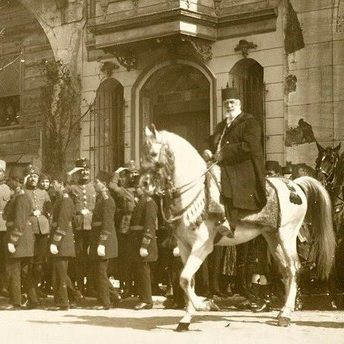
The last Caliph Sultan Abdülmecid Efendi on his way to Friday prayers, 1923
In certain quarters, the Caliphate has been linked to extremism and terrorism. With reference to the Qur’an, the Sunnah and the classical scholars, we will show in this five part series that there is an obligation for the Muslim Ummah to be led by a Caliph/Imam and that this is a normative doctrine agreed upon by unanimous consensus (ijmā‘). This is illustrated by the fact that, when our beloved Prophet ﷺ passed away, the Companions (رضي الله عنهم) considered the matter of appointing a Caliph to rule after him ﷺ of such primacy that they delayed the Prophet’s ﷺ burial.
Thus, the necessity of the Caliphate/Imamate is described by classical scholars, such as Imam Ghazali, as being definite (qaṭ‘ī), and hence simply cannot be denied. In addition, the existence of the Caliphate is “the necessary precondition for hundreds of rulings established by Allah Most High to govern and guide Islamic community life” [Shaykh Nuh Keller (h), Reliance of the Traveller: A Classic Manual of Islamic Sacred Law, Amana Publications, Maryland, 1994, p. 628].
Moreover, the classical scholars considered the subject matter of the Caliphate so vital that they included discussion of it in their books about creed/beliefs.
We begin by examining some evidences from the Qur’an and the explanations in works of Qur’anic exegeses (tafsīr).
Proof from the Qur’an
إِنِّى جَاعِلٌۭ فِى ٱلْأَرْضِ خَلِيفَةًۭ
“I am putting a Caliph on the earth” [2:30]
The famous exegete Ibn Kathīr comments in his well-known tafsīr:
وقد استدل القرطبي وغيره بهذه الآية على وجوب نصب الخليفة ليفصل بين الناس فيما يختلفون فيه ، ويقطع تنازعهم ، وينتصر لمظلومهم من ظالمهم ، ويقيم الحدود ، ويزجر عن تعاطي الفواحش ، إلى غير ذلك من الأمور المهمة التي لا يمكن إقامتها إلا بالإمام ، وما لا يتم الواجب إلا به فهو واجب
“Al-Qurṭubi, as well as other scholars, said that this āyah (2:30) proves the obligation of appointing a Caliph to pass judgements on matters of dispute between people, to aid the oppressed against the oppressor, to implement the Islamic penal code, and to forbid evil. There are many other tasks that can only be fulfilled by appointing the Imam, and what is necessary in performing an obligation, is an obligation itself.” [Tafsīr Ibn Kathīr, Vol. I, p. 129. Cf. Vol. I, p. 185 of the English translation by al-Mubarakpuri et al]
Here Ibn Kathīr refers to the agreed upon legal maxim from usūl al-fiqh that
ما لا يتم الواجب إلا به فهو واجب
‘Whatever is necessary to fulfil a duty is itself an obligation’
The Caliphate is in fact a prerequisite for the implementation of a long list of Sharī‘ah rulings.
Ibn Kathīr mentions al-Qurṭubī, who comments in his exegesis:
هذه الآية أصل في نصب إمام وخليفة يسمع له ويطاع ، لتجتمع به الكلمة ، وتنفذ به أحكام الخليفة . ولا خلاف في وجوب ذلك بين الأمة ولا بين الأئمة إلا ما روي عن الأصم حيث كان عن الشريعة أصم ، وكذلك كل من قال بقوله واتبعه على رأيه ومذهبه ، قال : إنها غير واجبة في الدين بل يسوغ ذلك ، وأن الأمة متى أقاموا حججهم وجهادهم ، وتناصفوا فيما بينهم ، وبذلوا الحق من أنفسهم ، وقسموا الغنائم والفيء والصدقات على أهلها ، وأقاموا الحدود على من وجبت عليه ، أجزأهم ذلك ، ولا يجب عليهم أن ينصبوا إماما يتولى ذلك . ودليلنا قول الله تعالى : إني جاعل في الأرض خليفة ، وقوله تعالى : يا داود إنا جعلناك خليفة في الأرض ، وقال : وعد الله الذين آمنوا منكم وعملوا الصالحات ليستخلفنهم في الأرض
“This āyah is sound evidence for having a leader and a Caliph who is obeyed so that he will be a focus for the cohesion of society and the rulings of the Caliphate will be carried out. None of the Imams of the Community disagree about the obligatory nature of having such a leader, except for what is related from al-Aṣamm (lit. the Deaf), who lived up to the meaning of his name and was indeed deaf to the Sharī‘ah, and those who take his position who say that the Caliphate is merely permitted rather than mandatory if the Community undertakes all their obligations on their own without the need for a ruler to enforce them. Our evidence is found in the words of Allah Almighty: ‘I am putting a caliph on the earth’ as well as other āyahs (38:26, 24:55)”
Al-Aṣamm was from the heretical Mu‘tazilite sect, so his deviant opinions (such as the belief that the Qur’an was created) and those of a few others like him are disregarded by Orthodox Muslims.
Al-Qurṭubī continues in his commentary of verse 30 of Surah al-Baqarah:
فدل على وجوبها وأنها ركن من أركان الدين الذي به قوام المسلمين ، والحمد لله رب العالمين .
“All of this indicates that it [the Caliphate] is obligatory and is a pillar from the pillars of the dīn by which the strength of the Muslims is realised. Praise be to Allah, Lord of the Worlds.”
[al-Jāmi‘ li Aḥkām al-Qur’ān, 1:264-265. Cf. Tafsīr al-Qurṭubī: The General Judgments of the Qur’an and Clarification of what it contains of the Sunnah and Āyahs of Discrimination, Vol. 1, translated by Aisha Bewley, Diwan Press, 2019, pp. 148-149]
Another verse proving the obligation of the Caliphate/Imamate:
يَـٰٓأَيُّهَا ٱلَّذِينَ ءَامَنُوٓا۟ أَطِيعُوا۟ ٱللَّهَ وَأَطِيعُوا۟ ٱلرَّسُولَ وَأُو۟لِى ٱلْأَمْرِ مِنكُمْ ۖ فَإِن تَنَـٰزَعْتُمْ فِى شَىْءٍۢ فَرُدُّوهُ إِلَى ٱللَّهِ وَٱلرَّسُولِ إِن كُنتُمْ تُؤْمِنُونَ بِٱللَّهِ وَٱلْيَوْمِ ٱلْـَٔاخِرِ ۚ ذَٰلِكَ خَيْرٌۭ وَأَحْسَنُ تَأْوِيلًا
“O you who believe! Obey Allah and obey the Messenger and those in authority among you. If you have a dispute about something, refer it back to Allah and His Messenger, if you believe in Allah and the Last Day. That is the best thing to do and gives the best result.” [4:59]
Imam al-Bayḍāwī, in his famous tafsīr, comments on the meaning of ‘those in authority among you’ (أُو۟لِى ٱلْأَمْرِ مِنكُمْ):
و يندرج فيهم الخلفاء و القضاة و أمراء السرية
“It comprises Caliphs, judges and military commanders” [Anwār al-Tanzīl wa Asrār al-Ta’wīl, Vol. II, p. 80. Cf. Integrated Encyclopedia of the Qur’an, vol. 1, p. 278]
Judges and military commanders are appointed by the Caliph and this is further proof for the necessity of the Imamate.
Also, there are several verses of the Qur’an commanding us to judge/rule by Islam that again mandates the existence of the Islamic system of governance, such as:
وَأَنزَلْنَآ إِلَيْكَ ٱلْكِتَـٰبَ بِٱلْحَقِّ مُصَدِّقًۭا لِّمَا بَيْنَ يَدَيْهِ مِنَ ٱلْكِتَـٰبِ وَمُهَيْمِنًا عَلَيْهِ ۖ فَٱحْكُم بَيْنَهُم بِمَآ أَنزَلَ ٱللَّهُ ۖ وَلَا تَتَّبِعْ أَهْوَآءَهُمْ عَمَّا جَآءَكَ مِنَ ٱلْحَقِّ
“And We have sent down the Book to you with truth, confirming and conserving the previous Books. So judge/rule between them by what Allah sent down and do not follow their whims and desires, deviating from the Truth that has come to you.” [5:48]
For more on the Caliphate imperative mentioned in our Holy Book, see here.
In the next part of this series, we will examine the evidences for this topic from the Sunnah of our beloved Prophet ﷺ.
 The Caliphate
Asalamu’laikum, what is the tafsir of the last verse you mention i.e. Quran 5:48?
Wa ‘alaykum salam wa rahmatu’Llah. JazakAllahu Khayra for your question. I will try to be concise:
Imam Qurtubi comments on “So judge/rule between them by what Allah has sent down” stating ‘Judgment is mandatory’ [Vol. V, p. 175 of Ustadha Aisha Bewley’s translation]. And Ibn Kathir comments on this part of the verse: ‘The Ayah commands: O Muhammad! Rule between the people, Arabs and non-Arabs, lettered and unlettered, by what Allah has revealed to you in this Glorious Book…’ [Vol.III, p. 197 of the English translation by al-Mubarkpuri et al]. – Abdul Malik
JazakAllahu khair for the response – If may ask a follow up. Is the ayah in relation to the caliph being present an obligation on us all? I am just trying to make sense of how this verse relates to the caliphate.
BarakAllahu feek my brother. Dr. Reza Pankhurst discusses this point here: https://islamciv.com/2017/09/23/contentions-around-the-obligation-to-establish-the-khilafah-the-obligation-to-establish-a-khilafa-is-not-mentioned-in-the-quran-and-therefore-not-an-obligation/
He comments: “Every verse that mentions a law that must be implemented is an evidence for the obligation to establish an authority to implement that law” and he elaborates on this. The article is excellent please do read it. Wassalam – Abdul Malik.
JazakAllahu Khair for following up. The link clarified my question. May Allah reward you.
BarakAllahu feek my brother – Abdul Malik