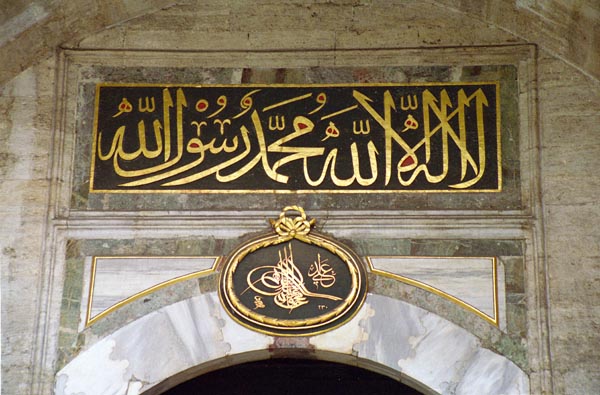
The Ummatics Institute has recently published an article on ‘Early Ḥanafī Authorities on the Imamate’, in which extracts from the works of a number of Hanafi scholars are translated by Maulana Asim Ayub. A graduate of Darul Ulum Bury, he has studied with expert scholars such as Shaykh Shams Tameez and Shaykh Abdurrahman Mihrig.
Significantly, Maulana Asim notes that “the majority of scholarly reflection on the imamate is found in theological works, in spite of it being a legal issue”. The classical scholars viewed the subject as so vital that they included discussion of it in essays and books on creed.
The following is from the creedal tract al-Tamhīd fi Bayan al-Tawḥīd by Abū Shakūr al-Sālimī (who passed away after 460 H/1066 CE) – Maulana Asim’s footnotes have been retained.
اعلم بأن الخلافة ثابتة، والإمارة قائمة مشروعة واجبة على الناس أن يروا على أنفسهم إمامًا بدليل الكتاب والسنة وإجماع الأمة. أما الكتاب فقوله تعالى {يَا أَيُّهَا الَّذِينَ آمَنُوا أَطِيعُوا اللَّهَ وَأَطِيعُوا الرَّسُولَ وَأُولِي الْأَمْرِ مِنْكُمْ}. وأما السنة فإنه لمّا توفي رسول الله عليه السلام اجتمعت الصحابة رضي الله عنهم في سقيفة بني ساعدة الخزرجي المهاجرون والأنصار، فقالوا: سمعنا رسول الله عليه السلام يقول: “من مات ولم يرَ على نفسه إمامًا مات مِيتةَ الجاهلية” فلا يجب أن يمضي علينا يومٌ ولا نرى لأنفسنا إمامًا. وهذا يدل على أن من لم يرَ الإمام حقًا فإنه يَكفر.
Know that the caliphate is an established matter [in the dīn] and that political leadership is an established and legislated affair. It is obligatory on the people that they appoint for themselves an imām. This is proven by the Qurʾan, the Sunna, and the Consensus of the Umma. As for the Qurʾan, Allah says, “O you who believe, obey Allah, obey the Messenger, and those in authority among you.” [18] As for the Sunna, when the Prophet [ﷺ] passed away the Companions, the Muhājirūn and the Ansār, gathered in the roofed shelter of Banī Sāʾida al-Khazrajī and said: “We heard the Messenger of Allah [ﷺ] say, ‘Whoever dies without an imām over him dies a jāhilī death’[19]; it is thus not right that a day pass over us without an imām.” This indicates that whoever denies the necessity of the Imām commits disbelief. [20]
Footnotes
[18] Qurʾan, al-Nisāʾ: 59
[19] This narration is found with slightly different wordings in Ṣaḥīḥ Muslim, #1851; Musnad Aḥmad, #16876; Ṣaḥīḥ Ibn Ḥibban, #4573; and others. The wording of the soundest report (Muslim) is, “Whoever dies without a pledge of allegiance on their neck (to an imām) dies a jāhilī death.” A “jāhilī death”, as Ibn Hajar explains, is to die in a state of disobedience (not disbelief) that resembles the death of the people of Pre-Islamic period in a state of being astray and without an imām who is obeyed (Fath al-Bārī, ed. Muhibb al-Dīn al-Khatīb, 13 vols., Beirut: Dar al-Maʿrifa, 1379, 13:7)
[20] Kufr is entailed in the outright rejection of the obligation—as opposed to not acting on it—as is the case with the rejection of any matter established definitively to be of the dīn. Abū Shakūr al-Sālimī, Al-Tamhīd Fī Bayān Al-Tawḥīd, ed. ʿUmar Turkmān (Beirut: Dār ibn Ḥazm, 2017), 309
 The Caliphate